Processing a single bank account statement isn’t too much of a challenge. In the case of a single PDF file is needed even manual entry is to be manageable.
Then multiply this number by numerous companies, several banks and various period of statements.
The problem has been solved. It was once a straightforward clerical task, but now it’s an arduous process that consumes staff time and raises the risk of inaccurate data entry. Better bank statement conversion doesn’t just mean making a single document more efficient. It’s about developing an efficient system as the volume of transactions increases.
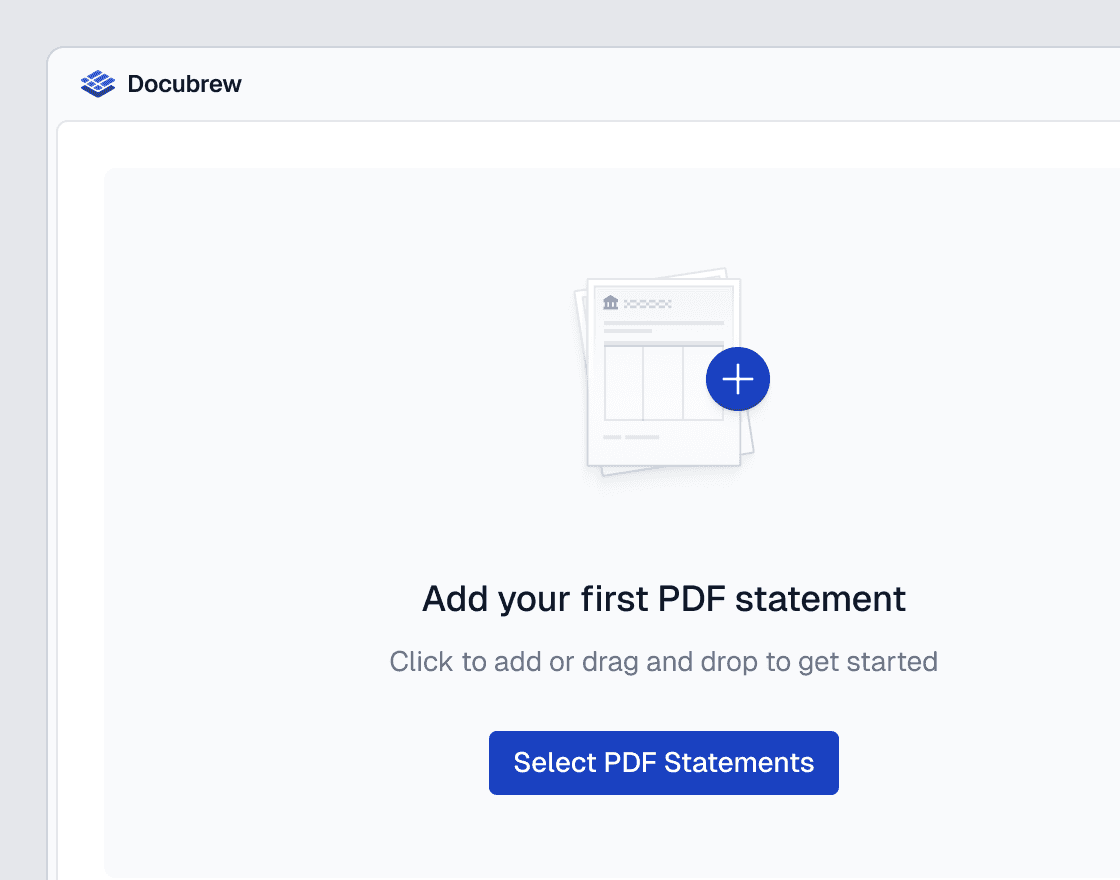
Image credit: docubrew.com
The bottleneck is repetition
Think about an accounting company receiving monthly PDFs from several clients. One client provides statements from Chase one, another Wells Fargo and others Bank of America, Capital One or Citi.
Access each PDF file and manually enter each transaction manually.
A bank statement converter can shift that workflow from transcription toward review. Docubrew analyzes the actual bank statement to determine transaction numbers instead of estimating value. This creates structured files which can be reviewed before use. With the increase in document volume, this distinction becomes even more important.
Batch processing changes the equation
A separate handling of files is suitable for periodic conversions. Accounting firms are often faced with a completely different situation. Docubrew allows you to create and manage multiple accounts simultaneously. Results are available separately. The company can process an abundance of documents provided by clients without needing the task of manually re-creating every transaction table.
Users can convert bank statements to CSV format and then examine the transaction data.
Scanned paper statements can’t be necessarily excluded. Docubrew can OCR scan PDFs. This is helpful when the client’s history has an assortment of native PDFs and scanned documents.
Develop Outputs to the Accounting Work Ahead
The process of conversion isn’t completed. Most transactions need to be processed.
Docubrew exports CSV and Excel. QBO is a choice for a team to export a bank account into Quickbooks. Also, it is available in a general spreadsheet format.
Companies that convert bank statement data into Quickbooks regularly may develop a process more consistent around the receipt of statements, the processing, as well as the processing and checking of the data, and the preparation of the necessary documents for the accounting workflow.
Human-based review is still essential. Automating repetitive transcription is a possibility to be performed, but bookkeepers remain responsible for making sure that financial data is accurate as well as completing accounting tasks.
The data from the clients is a Workflow-related Decision Itself
The handling of more sensitive client information is also related to higher volumes of documents.
Docubrew offers two processes. The Windows desktop application performs conversions locally, allowing files to be kept on the computer of the company. Docubrew states that cloud uploads are secured and uploaded files and transformed files will be automatically deleted after 24 hours.
Accounting practices may choose the best approach for their internal handling needs.
Scale Processes, Not Repetitive Work
The increasing use of bookkeeping procedures should result in more financial documents. It shouldn’t automatically allow for more copy-and-paste.
It is vital to determine what process worked for five clients is able to be applied to 50.
The way that statements are received, reviewed and created for accounting software could aid companies in creating a process that is designed to handle recurring volumes, rather than making each PDF an individual manual project.